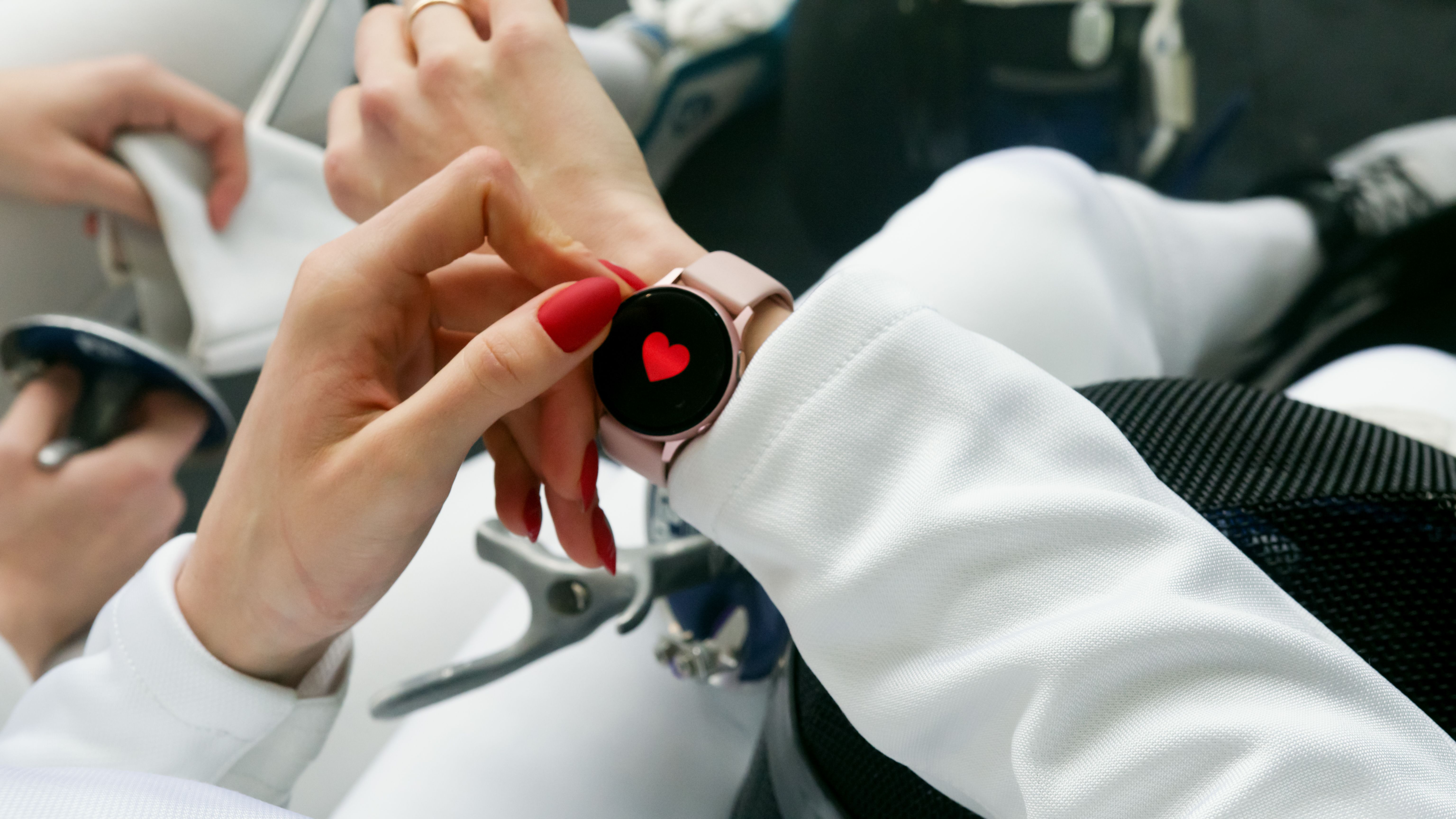
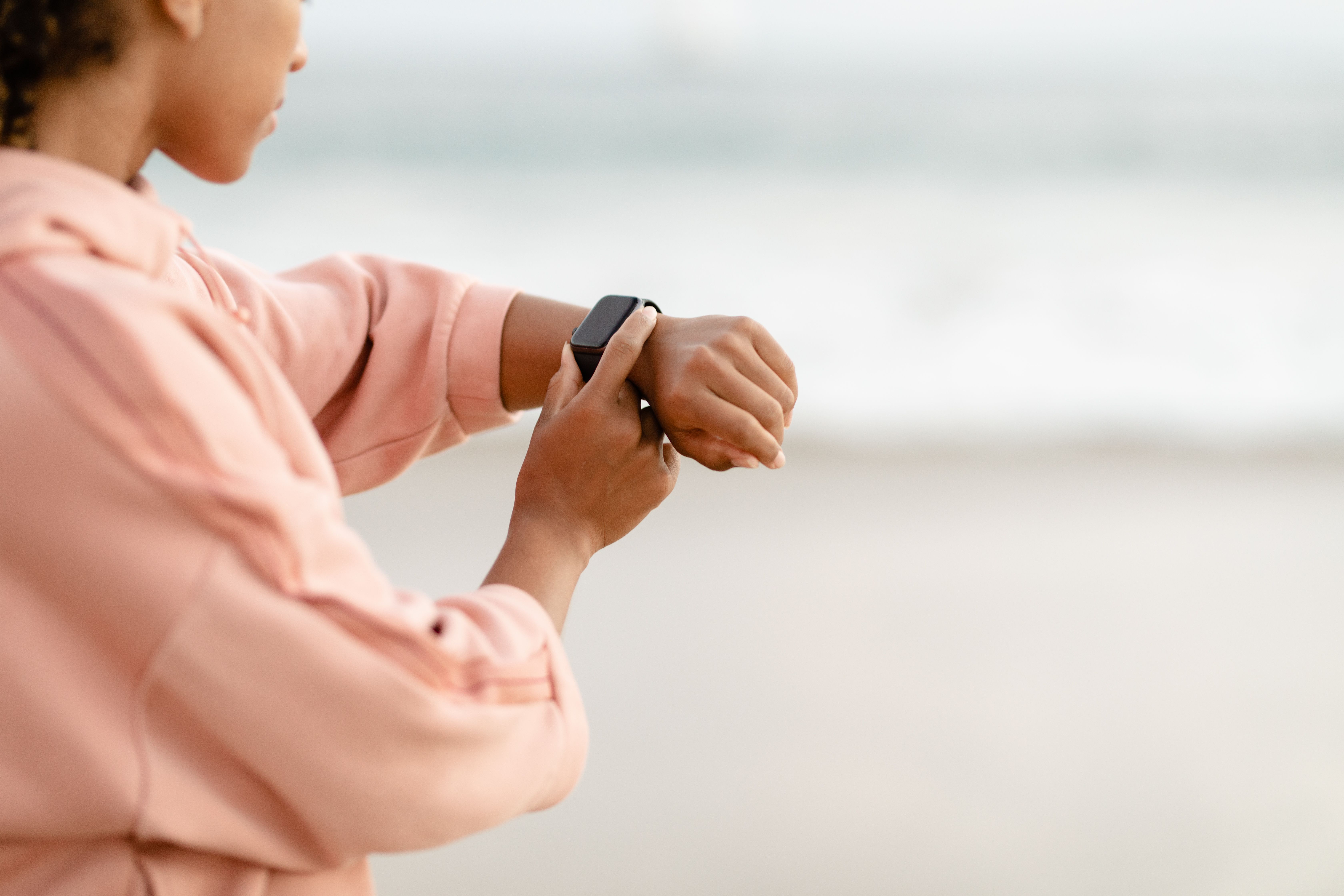
You slept eight hours. You didn't drink. You ate well, you trained smart, you did everything the internet told you to do.
Your HRV is still down. Your recovery score is red. Again.
So you do the thing we all do. You Google your number. You find a chart that says women your age should be somewhere around 50, and yours says 32, and now you're wondering what's wrong with you.
Nothing is wrong with you. Your nervous system is going through something, and the number is describing it accurately. The problem isn't the data. It's that nobody explained what the data actually means for a woman in her forties.
Let's fix that.
What HRV Actually Is
Heart rate variability isn't a fitness score. It's not a grade. It's not a measure of how disciplined you were yesterday.
Your heart doesn't beat like a metronome. If your resting heart rate is 60, that doesn't mean exactly one beat every second. The gaps between beats vary slightly — 0.98 seconds, then 1.04, then 0.99. HRV measures that variation.
Here's why it matters. That variation is controlled by your autonomic nervous system, which has two branches. The sympathetic branch is your accelerator: stress, alertness, fight-or-flight. The parasympathetic branch, driven largely by your vagus nerve, is your brake: rest, digest, recover.
When your brake is working well, your heart rate flexes moment to moment. Variation is high. When your accelerator dominates — stress, illness, poor sleep, hard training — the flexing goes away. Your heart beats more rigidly. Variation drops.
So HRV is a window into which branch has the upper hand right now. High HRV generally means your body has capacity available. Low HRV generally means your body is spending its resources on something else.
That's it. It's a capacity signal, not a character assessment.
Why It Shifts in Perimenopause
Here's the part almost nobody tells you.
Estrogen and progesterone don't just run your reproductive system. They modulate your autonomic nervous system too. Estrogen supports vagal (parasympathetic) tone. Progesterone has calming, sedative properties. Together, they've been quietly helping your brake work well for decades.
In perimenopause, those hormones start fluctuating and declining. As they do, vagal control weakens and sympathetic tone gets relatively louder. Research across the menopause transition has found reduced HRV and reduced vagal control, with lower values in women reporting more intense symptoms.
Read that again, because it reframes everything: a lower HRV in your forties isn't a failure. It's physiology.
You didn't lose your discipline. You lost some hormonal support for your parasympathetic nervous system. Those are completely different problems, and only one of them is your fault. (Neither, actually. Neither is your fault.)
This also explains the noise. It's not just that your average drifts down. Your day-to-day numbers can swing around more than they used to, because the hormonal environment producing them is itself less stable than it used to be. A jumpy graph in perimenopause isn't a broken sensor. It's a fair drawing of a jumpy system.
Why Your Number Is Meaningless Next to Hers
This is where most of the anxiety comes from, so let's kill it properly.
HRV is one of the most individual metrics in all of physiology. It's shaped by your age, your genetics, your baseline fitness, your anatomy, and where and how it's measured. Two healthy women the same age can differ by a factor of three and both be completely normal.
There is no "good" HRV. There's only your HRV, and which direction it's moving.
But here's the part that surprises people, and it's important: your own number isn't even comparable across devices.
Wear a Whoop and an Oura on the same night and you'll get two different HRV values. Not slightly different. Meaningfully different. That's not a malfunction. They're measuring different things.
Whoop pulls HRV from your last slow-wave sleep cycle — a narrow, deliberately chosen window. Oura samples every few minutes across your entire night and averages it. Different windows, different algorithms, different numbers. Both can be internally valid, and neither translates to the other.
The scores built on top diverge even further. HRV drives the majority of Whoop's Recovery score, while Oura's Readiness blends HRV with resting heart rate, temperature, sleep, and recent activity — so HRV alone explains only a small slice of it. Same night, same body, two different verdicts.
So the rule is stricter than "compare yourself to yourself." It's:
Compare yourself to yourself, on the same device, over time.
Switch devices and your baseline resets. That's not a reason to panic. It's just a new ruler. Give it a few weeks and start reading the trend again.
And if you're still deciding which device to build that baseline on, I broke that down here: the best wearable for perimenopause.
What Actually Moves Your HRV
Roughly in order of how much leverage you have:
Alcohol. This is the big one, and it's the most controllable. A large real-world study of nearly 21,000 adults wearing trackers found that after drinking, resting heart rate during sleep went up, HRV went down, sleep got shorter, and next-day activity dropped — with dose-dependent effects that were larger in women than men. Two glasses of wine will show up on your graph. If you want a fast, undeniable demonstration that your device is measuring something real, watch what a Saturday night does to your Sunday number.
Sleep. More on this below, because in perimenopause it deserves its own section.
Illness. Often the first thing you'll notice. HRV frequently drops a day or two before you feel sick. This is one of the genuinely useful early-warning uses of a wearable.
Training load. A hard session should lower HRV the next day. That's not damage, that's the expected cost of the stimulus. The question is whether it bounces back within a day or two. If it stays down for a week, you're accumulating fatigue faster than you're recovering from it.
Psychological stress. A brutal work week reads a lot like a brutal training week. Your nervous system doesn't distinguish between a deadline and a deadlift.
Hormones. Both across your cycle, while you still have one, and across the transition itself. This is the layer you can't control — and the reason your old baseline isn't coming back.
Notice that hormones are last, not because they're least important, but because they're least actionable. The top of the list is where your leverage lives.
Sleep Is Upstream of Everything
If HRV is the readout, sleep is the biggest input. And in perimenopause, sleep gets attacked from several directions at once.
Sleep disruption in this transition is rarely down to a single cause. Progesterone, with its sedative effect, is often one of the first hormones to drop, so you lose some built-in sleep support early. Melatonin declines as well, which nudges your body clock off rhythm. A more reactive stress response and the classic 3 a.m. cortisol wake-up pile on. Night sweats and other vasomotor symptoms tend to arrive later in the transition, not at the start.
Which means: your sleep can get lighter and choppier well before you ever have a hot flash. And your HRV will report it faithfully.
This is worth sitting with. If your recovery scores started sliding and you have no idea why, and you're nowhere near the classic symptoms, you're not imagining it and you're not too early to be in perimenopause. Your sleep architecture may already be changing.
When Low HRV Is Worth a Doctor's Visit
Let's be clear about the boundary. A wearable is a wellness device, not a diagnostic tool. Your HRV number is not a reason to see a doctor.
Your symptoms are.
Talk to a clinician if you have heart palpitations that concern you, chest pain, shortness of breath, fainting or near-fainting, or a persistent drop in HRV alongside real symptoms like profound fatigue, unexplained weight change, or new health problems. Palpitations in particular are common in this transition and worth mentioning to your doctor rather than to your app.
And if your sleep is genuinely wrecked, that's a conversation worth having too. There are real options, including hormone therapy for the right person, and that's an individualized medical decision — not something to be settled by a graph.
The device gives you signals. It doesn't give you a diagnosis. Don't let it become the thing that stops you from seeking actual care.
What to Actually Do With It
Here's where all of this pays off.
Stop reading your HRV as a verdict on yesterday. Start reading it as information about today.
Watch the trend, not the day. One low number is noise. Your body has bad nights. A downward drift across two or three weeks is a signal worth acting on.
Let it change your training. This is autoregulation, and it's tailor-made for perimenopause, because your capacity genuinely varies more now than it used to. Green, well-recovered day? Go get it. Hit the heavy sets. Red day after a broken night? Don't force it. Drop the load, cut a set, take the walk instead.
Understand what you're not doing. You're not going easy. You're not being soft. You're training the body you have today rather than the one you had at thirty. Over months, that's what lets you keep progressing instead of grinding yourself into a hole and quitting in March.
Don't chase the number. The goal isn't a higher HRV. The goal is a stronger, more resilient you. HRV is the dashboard, not the destination.
If you want a framework for building strength around these signals, start here: how to work out during perimenopause. And if you're at the beginning and want the decisions made for you, the Perimenopause Strength Blueprint walks you through your first four weeks.
Bottom Line
Your HRV isn't a report card. It's a capacity signal from a nervous system that's currently navigating a real hormonal transition.
It's lower than it used to be because your hormones changed, not because you failed. It's not comparable to your friend's, or to a chart on the internet, or even to your own number from a different device. It's noisy because the system underneath it is noisy right now.
Use it for what it's good at: spotting your trend, catching illness early, and deciding whether today is a push day or a back-off day. Then close the app and go train.
Track trends. Respect the red days. Push on the green ones.
Let's keep getting stronger together.
This post is for informational and educational purposes only and does not replace medical advice. Always consult with your healthcare provider before making changes to your exercise, nutrition, or supplement routine, especially regarding hormone therapy, which requires individualized medical assessment of risks and benefits.