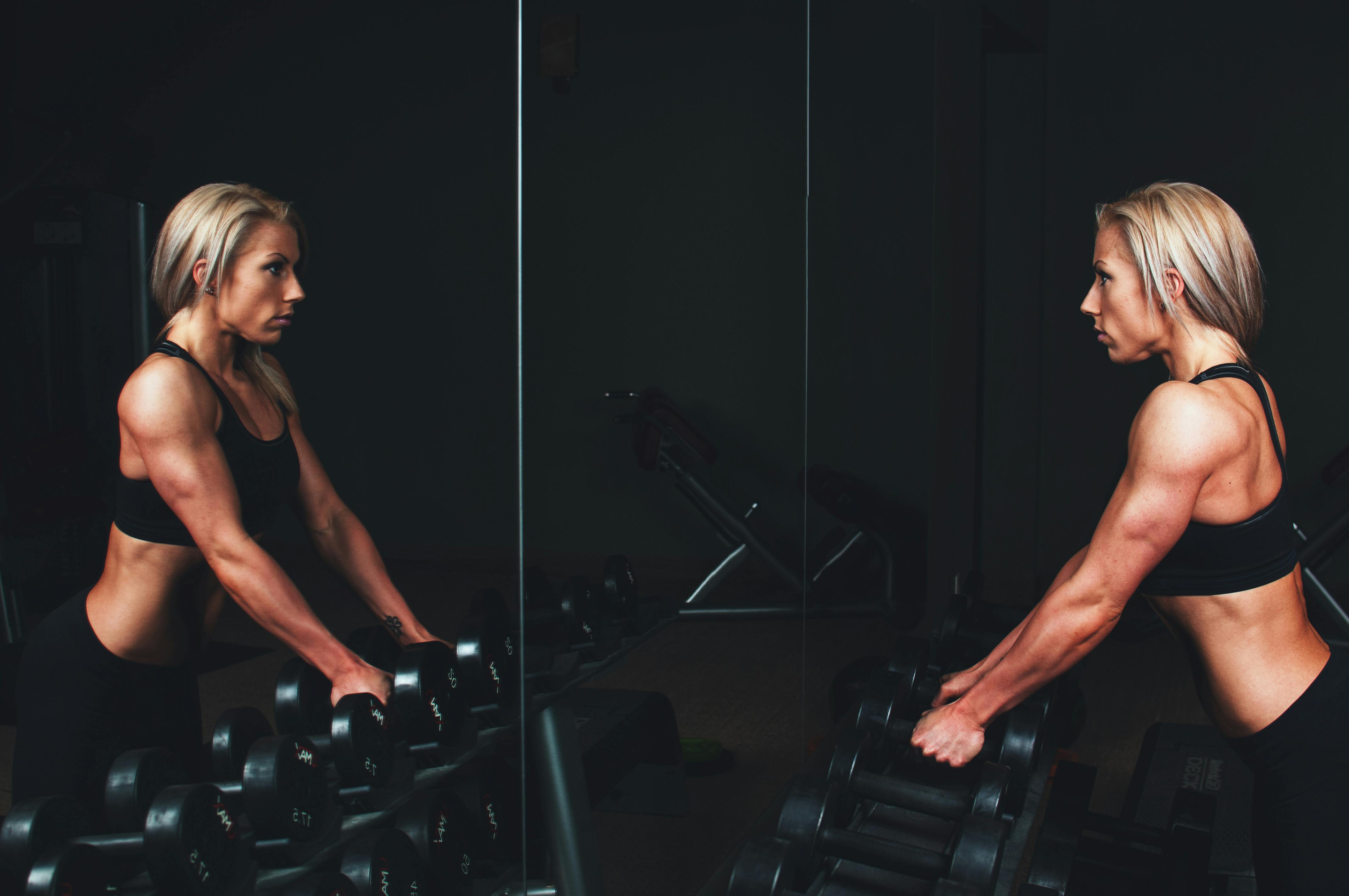
You already lift heavy
Picture this. You're carrying a 35-pound toddler on one hip and two bags of groceries in the other hand, while unlocking the front door with your elbow.
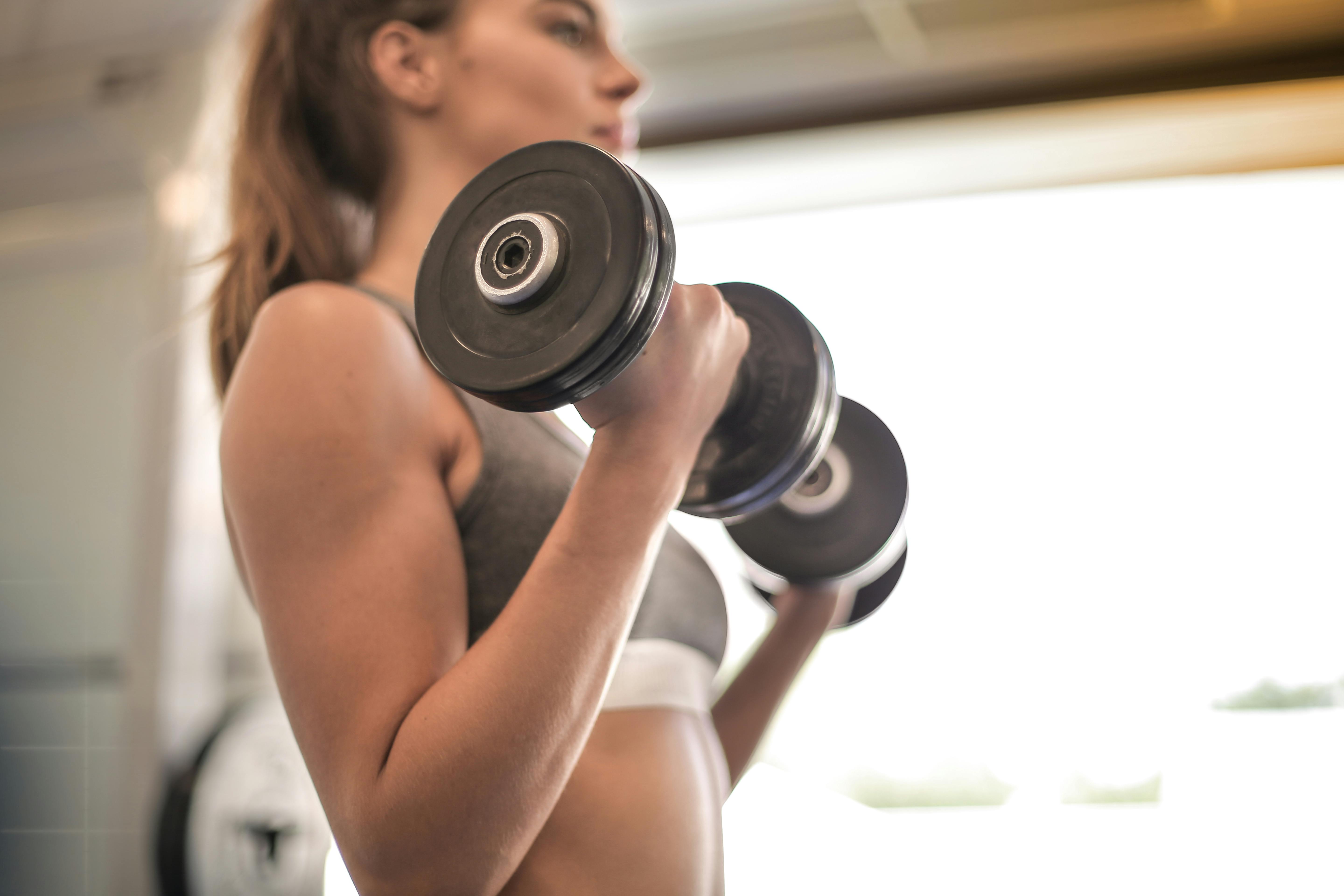
Then you walk into the gym, see the 20-pound dumbbells, and think: that's way too heavy for me.
I see this all the time. Women consistently underestimate how strong they are. We reach for the pink 5-pounders because that's what we think "beginner" means. The problem isn't that light weights are dangerous. It's that they rarely challenge you enough to make you stronger, protect your bones, or make your time in the gym count.
In this post, I'll show you how to find the right starting weight in a single session. And I'll explain why the exact number matters a lot less than you think.
Here's the short version: choose a weight that makes 8–12 reps feel hard. If you can do 20, it's too light. And when in doubt, try the heavier one.
The weight isn't the goal. The effort is.
Choosing a weight should never be the thing that stops you from training. There's no perfect number waiting to be discovered, and you don't need to get it right on day one.
What actually drives results comes down to two simple rules:
- Make each set hard. Aim for a specific level of effort, not a specific number on the dumbbell.
- Do a little more next week. Whatever you lifted this week, nudge it up next week.
Get these two right, and your starting weight will sort itself out within a couple of sessions.
Rule 1: Make the set hard
Here's your target: pick a weight where 8–12 reps feel hard. The last two or three reps should take real effort, but you can still finish them with good form.
The 20-rep test
If you can comfortably do 20 or more reps, the weight is too light. Don't go up by one size. Go up by a few.
Too light? Keep going.
If a set feels easy halfway through, don't stop at the number you planned. Keep going until it gets hard, note how many reps you did, and pick a heavier weight for your next set.
Too heavy? That's fine too.
Worst case, you pick a weight that's heavier than expected and only get 6 reps instead of 10. That's still a great set. Six hard reps give your muscles a strong signal to adapt. An easy set of 12 does much less.
Choosing a weight that's a little too heavy is almost always better than choosing one that's too light.
What counts as a rep
Counting reps only works if every rep is a real one. Here's what that means:
- Lower the weight slowly, over about 2–3 seconds. Stay in control the whole way down. You can lift it back up with steady effort; there's no need to go slow on the way up.
- No bouncing, swinging or dropping. Momentum makes a weight feel lighter than it is, so you'll think you can do 15 when the honest number is 10.
- Use the full range you can control. Go as deep as you can while keeping good form, every rep. Cutting reps short makes a weight feel lighter than it is, just like momentum does.
- Try the pause test. Could you stop halfway down if someone asked you to? If not, you're not in control.
- When control goes, the set is over. If you can only finish by speeding up or swinging, those last reps don't count. The set ended where control did.
Controlled lowering does two things. It keeps your reps honest, so "10 reps" means the same thing from week to week. And it's where you learn the movement and build good form.
Why heavier is worth it
To be clear: light weights aren't useless. Research shows muscle can grow across a wide range of reps, as long as you take your sets close to failure (Schoenfeld et al., 2017). But for women in midlife, heavier weights have three big advantages:
- More strength. Heavier loads build strength faster than lighter ones, even when muscle growth is similar. Strength is what makes carrying, climbing stairs and getting up off the floor easy.
- Stronger bones. Bone responds to load. In the LIFTMOR trial, postmenopausal women with low bone mass who did supervised heavy lifting plus impact training improved their bone density, without an increase in injuries (Watson et al., 2018).
- Less time. Getting a set of 20+ reps close to failure takes a long time and is pretty miserable. Eight to twelve hard reps get you there faster.
How to find your starting weight in one session
You don't need a formula. You need one or two test sets per exercise. Here's how:
- Warm up light. Do 8–10 easy reps with a weight that feels like nothing. This rehearses the movement and warms up your joints.
- Pick heavier than feels comfortable. Whatever your instinct says, go one size up. Remember the toddler and the groceries.
- Do one set, with controlled reps. Aim for 10 reps, lowering slowly each time.
- Rate it. How many reps did you do, and how did the last few feel?
- Adjust for the next set using the table below.
| What happened | Next set |
|---|---|
| 20+ reps, still felt easy | Go up 2–3 sizes |
| 12–20 reps, last few felt OK | Go up 1–2 sizes |
| 8–12 reps, last 2–3 felt hard | You found it. Stay here. |
| 5–7 reps, hard but good form | Keep it. Aim to add reps next week. |
| Under 5 reps, or form broke down | Go down a size |
One more tip: don't use the same weight for everything. Your legs and glutes are much stronger than your shoulders and arms. Most women can use a noticeably heavier weight for goblet squats or deadlifts than for shoulder presses or rows. Test each exercise on its own.
Write down what you used. That's your starting point, and it will change quickly.
Rule 2: Do a little more next week
Whatever weight you start with, it won't stay right for long. Beginners get stronger fast. That's the good news, and it's also why your starting weight matters so little.
The principle is called progressive overload: each week, ask your body to do slightly more than the week before. Pick one of these:
- Add a rep. Did 8 last week? Aim for 9 or 10 this week, same weight.
- Add weight. Once you can do 12 controlled reps with good form, go up a size (usually 2.5–5 lb for dumbbells) and drop back to around 8 reps.
- Add a set. Go from 2 sets to 3.
- Slow down the lowering. Take 3 seconds instead of 2. Same weight, harder set.
Then keep going, week after week, until the end of your training block.
To make this work, track three things for each exercise: the weight, the reps, and how it felt (easy, challenging, hard). A notes app is enough. Without a log, it's almost impossible to know whether you're progressing.
The non-negotiable: form before load
"Go heavier" always comes with a condition: only if you can do the movement safely. This matters most for compound movements like squats, deadlifts and presses, where several joints work together under load.
Earn each step
Master a movement before you load it. A simple progression looks like this:
- Bodyweight. Learn the pattern: the squat, the hip hinge, the push-up on an incline.
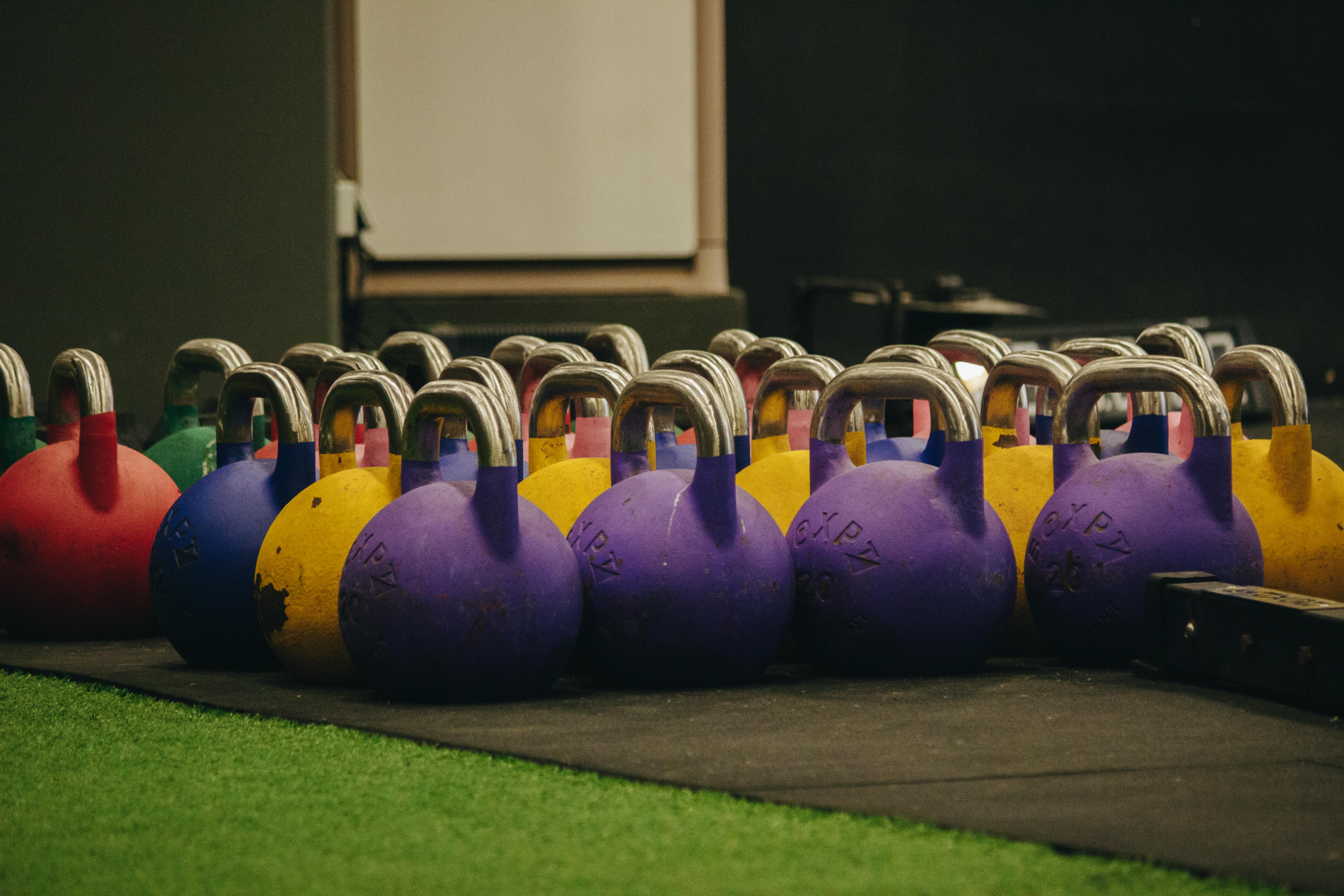
- Dumbbells or kettlebells. Goblet squats, kettlebell deadlifts from blocks, dumbbell presses and rows. This is where beginners should spend most of their time.
- Barbell, eventually. Start with a PVC pipe or broomstick to learn the bar path, then the empty bar, then add plates.
Barbell squats and deadlifts are great lifts, but I don't consider them beginner movements. There's more to coordinate, and form errors are easier to miss. You can build plenty of strength with dumbbells and kettlebells first.
Hard vs. unsafe
A hard set is the goal. An unsafe set isn't. Here's how to tell them apart.
Hard (keep going): muscles burning, breathing harder, the last reps slow down, but your position stays the same.
Too heavy for now (drop a size):
- Your form changes: knees cave in on squats, your back rounds on deadlifts, you lean back on presses.
- You can't control the lowering, or the weight drops on you.
- You feel sharp or joint pain, not muscle effort.
Every strong lifter drops a size now and then; it's part of training smart. Build the movement, then build the load.
Frequently Asked Questions
Pick up the heavier one
You don't need the perfect weight. You need a weight that makes the set hard, reps you control on the way down, and the habit of doing a little more each week.
So next time you're standing in front of the dumbbell rack, skip the ones that feel safe. Pick up the heavier pair. As long as you can move it well, you're probably stronger than you think.
Let's keep getting stronger together.
Ready to start? Get my free 5-Day Perimenopause Strength Starter: five sessions with form cues, so you know exactly what to do each day.
Want a full plan? My 4-week Beginner Strength program gives you three full-body sessions a week, step-by-step cues and built-in progressive overload.
This post is for informational and educational purposes only and does not replace medical advice. Always consult with your healthcare provider before making changes to your exercise, nutrition, or supplement routine, especially regarding hormone therapy, which requires individualized medical assessment of risks and benefits.